Maybe you stumbled across the word “neurographic” and felt curious. Maybe someone shared a page of flowing, soft lines and something in you paused. Maybe you’ve been looking for a creative practice but always told yourself: “I’m not an artist. That’s not for me.”
This article is for you.
It’s Not What You Think
Neurographic Art is not about making something beautiful. It’s not about talent, technique, or artistic skill.
It is a drawing practice — but one with a very different purpose.
The goal is not a finished piece of art on your wall. The goal is what happens inside you while you draw.
So What Is It, Exactly?
Neurographic Art is a gentle drawing method that uses slow, continuous lines to help your nervous system shift from stress into calm.
At its core, it works with four simple elements:
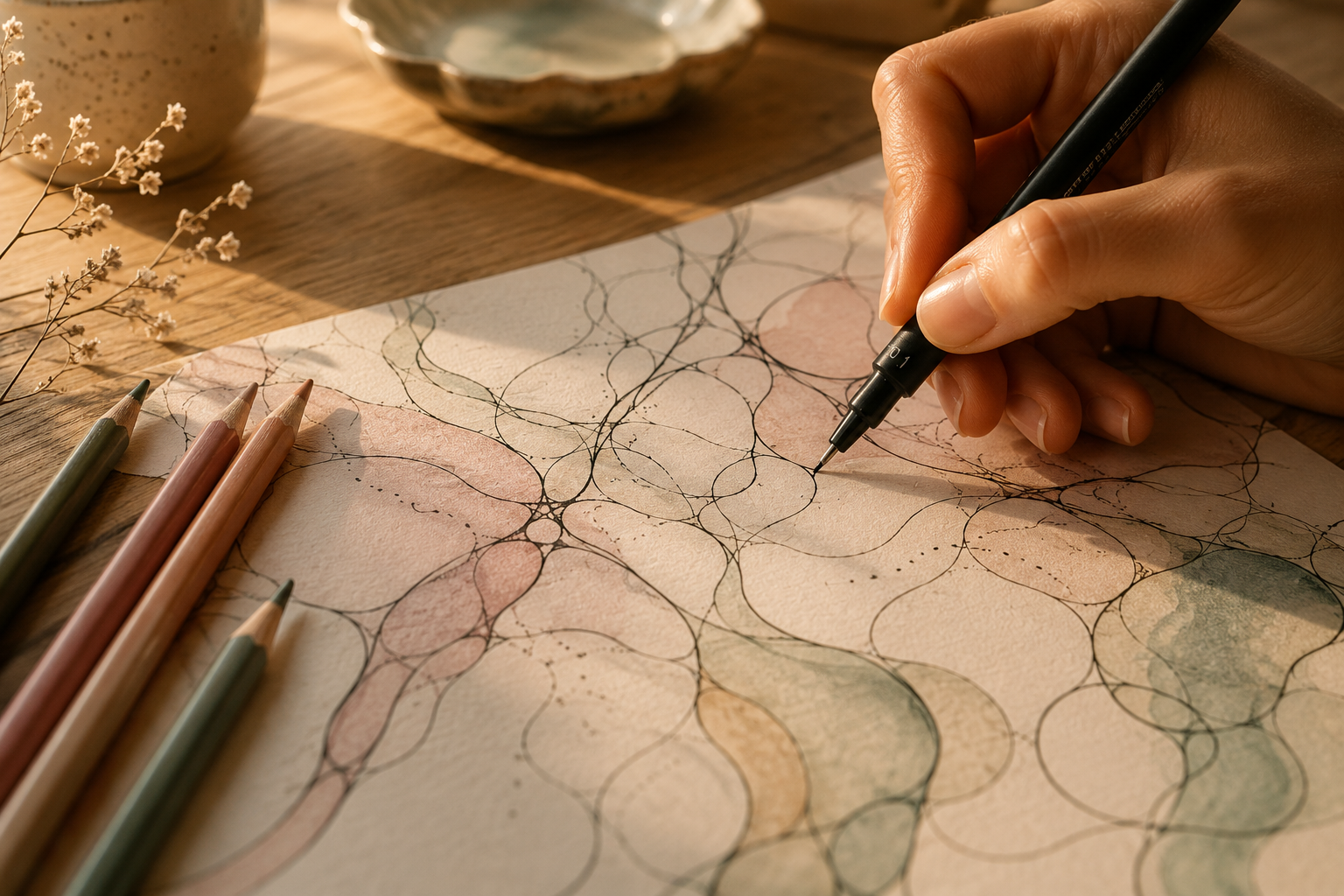
A continuous line — drawn slowly, without lifting the pen
Intersections — where lines cross each other
Rounded corners — softening every sharp point where lines meet
Repetition and rhythm — returning to the same movement, again and again
That’s it.
No special paper. No expensive materials. No art degree required.
Just a pen, a quiet page, and a few minutes of your time.
Why Does It Work?
When you draw slowly and continuously, something shifts.
Your breath slows down. Your mind stops jumping from thought to thought. Your body begins to release the tension it has been holding.
This happens because the act of drawing — especially slow, rhythmic drawing with rounded shapes — speaks directly to the nervous system. It invites focus without pressure. Movement without force.
The rounded corners are particularly important. Rounding a sharp intersection — softening what was angular — is a small but powerful act. It mirrors, in a quiet way, what we often need to do inside ourselves: soften what feels hard. Round what feels sharp.
You don’t need to understand exactly why it works. You only need to stay present with the line.
A Process, Not a Performance
This is the part I want you to really hear:
There is no right way to do this.
What your page looks like when you finish does not tell you whether the practice worked. A page full of hesitant, imperfect lines drawn with full presence is worth infinitely more than a beautiful drawing made without awareness.
You are not here to perform. You are here to be.
The 6-Step Neurographic Flow
Here is the basic method — the same one taught in the Neurographic Starter Kit:
Step 1 — Set your intention Before you begin, take a breath. Ask yourself: What do I need right now? Calm? Clarity? Release? Simply naming it is enough.
Step 2 — Draw your continuous line Put pen to paper and draw — slowly. Let the line travel across the page without lifting your hand. Let it cross itself. Let it be imperfect. That is exactly right.
Step 3 — Find the intersections Look at where your lines cross. These are the points of change — the places where something meets something else.
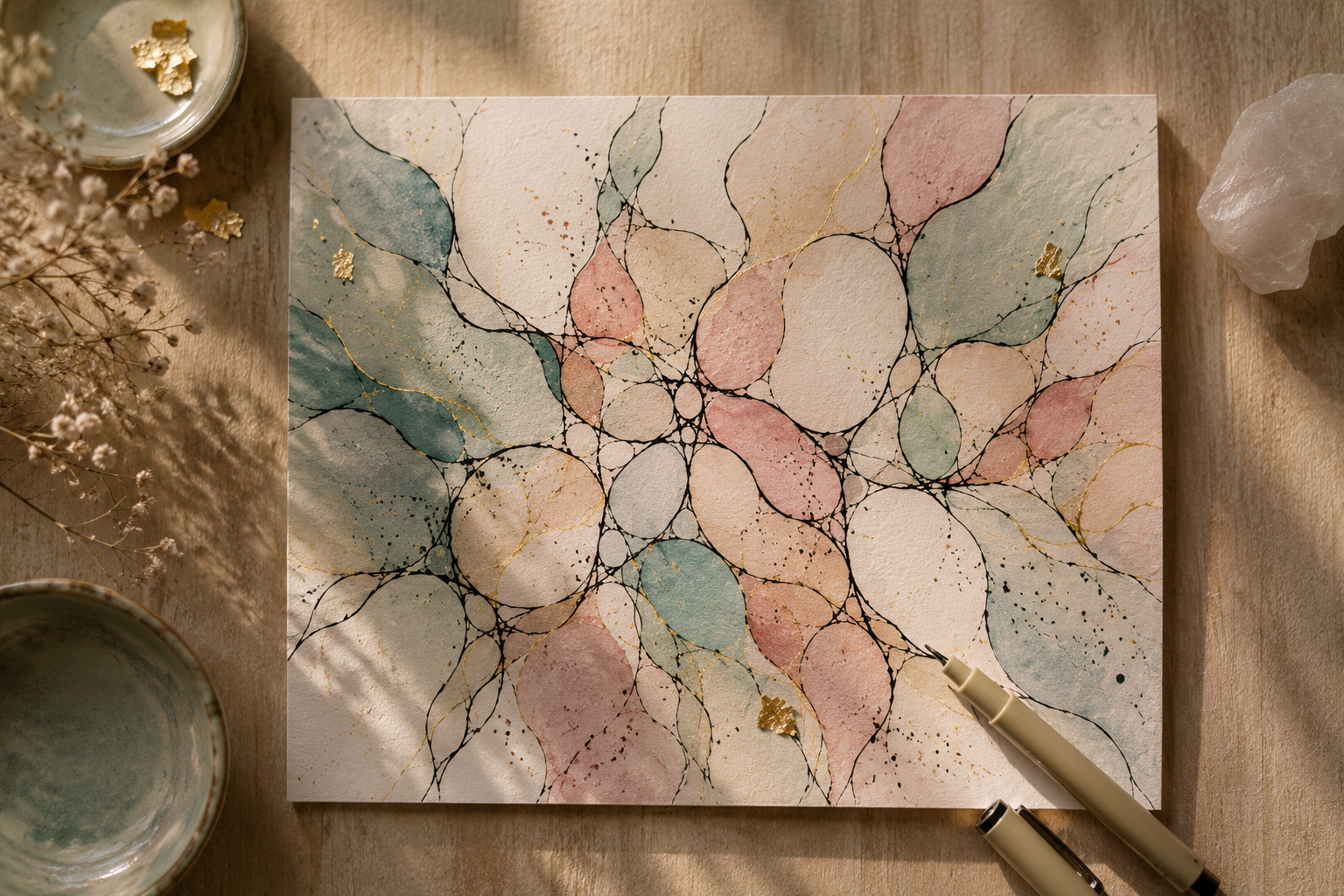
Step 4 — Round every intersection Go back to each crossing point and soften it. Round the corners. Take your time here. This step is where much of the shift happens.
Step 5 — Add color Using colored pencils, fill in the shapes your lines have created. There are no rules for color. Choose what feels right. Let the coloring be meditative — slow, gentle, present.
Step 6 — Reflect When you finish, pause. Notice how you feel. Notice if anything has shifted — in your body, your breath, your mind. You don’t need to analyze it. Just notice.
Who Is This For?
Neurographic Art is for you if:
- You feel overwhelmed and don’t know where to start
- You’ve tried meditation but your mind won’t quiet down
- You’re curious about art therapy but think you can’t draw
- You need something to do with your hands when emotions feel too big for words
- You’re looking for a practice that asks nothing of you except presence
It is especially gentle for those who are going through periods of transition, grief, burnout, or simply the quiet exhaustion of everyday life.
What You Need to Begin
Nothing complicated. Nothing expensive.
- A fine-liner pen or regular ballpoint pen
- Colored pencils (wax-based or oil-based work best)
- A quiet space and 10 to 20 minutes
That’s all.
You don’t need a special journal. You don’t need to clear your schedule. You don’t need to feel ready.
You only need to begin.
Where to Go From Here
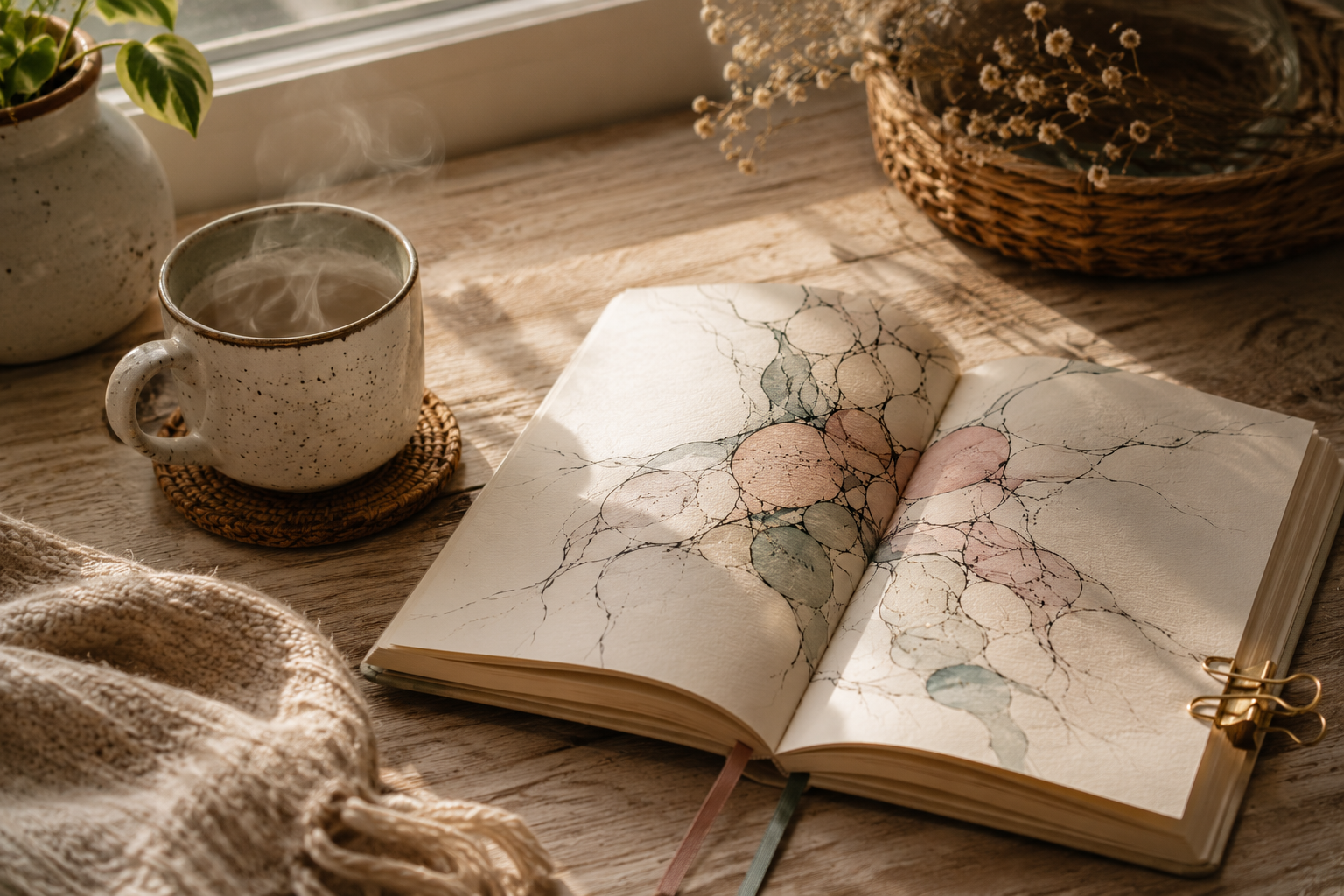
If you’d like to try neurographic art for the first time, I’ve created a free Neurographic Starter Kit — a gentle introduction to the full 6-step method, with 15 practice pages and three mini-journeys through Trees, Water, and Breath.
It’s completely free. It arrives in your inbox in minutes.
→ Download your free Neurographic Starter Kit here
And if something in you is drawn to go deeper, The Shape of Healing series offers six complete neurographic art practice books — each one exploring a different element of nature as a path back to yourself.
→ Explore The Shape of Healing on Amazon
One line at a time. One page at a time. One you at a time.
— Marylou